




1. Buy
Choose one of 6 ways to buy cryptocurrency
2. Store
Choose one of 3 methods
3. Sell/send
Choose one of 6 ways to sell cryptocurrency
Contents
Table — 6 Ways to Cash Out Cryptocurrency in Serbia
A few notes before selling
Buying and selling cryptocurrency in Serbia is permitted under the Law on Digital Assets.
How to exchange cryptocurrency (Bitcoin) for money is very important because it entails tax and the risk that the other party will scam you.
Selling Bitcoin and other cryptocurrencies is generally more expensive than buying them. This is because the other party is giving you real money that cannot increase fivefold in value as crypto can. One euro is always one euro, and there is even inflation for the person holding the money.
When selling crypto, the rule is to exchange it for a stable cryptocurrency—USDT is the most widespread—to avoid price variation. You agree on one price and, by the time you meet, the price may change by 5–10%, which means that the other party must always bring extra money just in case. However, if that is too costly for you, as can happen if you keep money outside an exchange, the other party will usually accept better-known crypto coins such as Bitcoin, Ethereum or Litecoin.
Selling cryptocurrency as an individual
Method | Explanation | ID | Fee | Tax |
|---|---|---|---|---|
Crypto ATM | Like an ATM | Yes | 6-7% | Yes |
In person (cash) | Meet and exchange in person | No | 2-6% | Should be paid |
Through a bank | Send money to an individual | No | 5-10% | Should be paid |
Exchange as intermediary | A foreign exchange connects two sides | Yes | 2-5% | Yes |
Exchange directly | Domestic or foreign exchange | Yes | 2-5% | Yes |
PayPal/company | Complicated, contact us | Yes | 8-12% | Should be paid |
Share with friends
*Verification (identity card) — Under the Law on the Prevention of Money Laundering and the Financing of Terrorism, since 29 June 2021 crypto exchanges have been required to confirm a user's identity (an identity card is required, along with questions about the origin of the money).
*Fee — Always check which exchange rate is used to calculate the fee. The middle exchange rate is the most favourable, while exchanges often use a worse rate for the user.
*Tax is paid if a gain is made (if you sell crypto and earn a profit), at a rate of 15% in Serbia, and a tax return must be filed.
Selling cryptocurrency as a legal entity
The situation for legal entities is somewhat more complex. It is best to contact us directly through WhatsApp or Telegram and describe your situation in detail so that we can direct you to the right person, often a lawyer, or company.
Selling Cryptocurrency Outside an Exchange
There are 3 ways to buy crypto outside an exchange. As shown in the table, we will cover each method.
Selling cryptocurrency by meeting in person (cash)

What it is: You meet the buyer in a public place and exchange crypto and money there; you will usually receive euros. If large amounts are involved, you can meet in a verified currency-exchange office. The greatest advantage of this method is complete anonymity. It is widespread here, and some people buy or sell continuously. Send us a message and we will connect you with someone near you.
When it makes sense: Always, unless it is rather urgent and you cannot arrange a meeting. The fee is agreed between you, but should not exceed 6%.
What you need to know: I recommend meeting only verified people. If you are meeting someone for the first time, always choose a public place covered by cameras. Cases in which people were robbed of enormous sums have already appeared in the news.
I also believe that, in this situation, people are still obliged to draw up a sale-and-purchase agreement showing the price so that capital-gains tax can be accounted for. In practice, I do not think this happens, and I think the state had that in mind when it legalized this form of exchange (OTC, or over-the-counter exchange).
Selling cryptocurrency through a crypto ATM
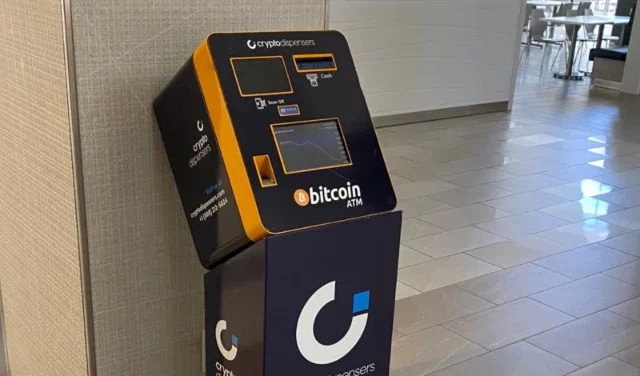
What it is: A crypto ATM is effectively an ATM that accepts your crypto and pays you dinars for a fee. The whole process takes 10 minutes on average. They are mostly installed in larger cities, and before using one you must have a verified account with the ECD exchange—identity card and passport—because the state monitors money laundering and terrorist financing. What you can sell is limited to Bitcoin (BTC) and Litecoin (LTC).
When it makes sense: If you urgently need money and are in Belgrade or Novi Sad.
What you need to know: This is the most expensive method, both for buying and selling. It is much better to know someone who regularly buys and sells—the so-called crypto dealers or “cryptomaniacs.”
Do not forget your tax return if you sold the crypto for a gain.
Selling cryptocurrency by bank transfer to an individual
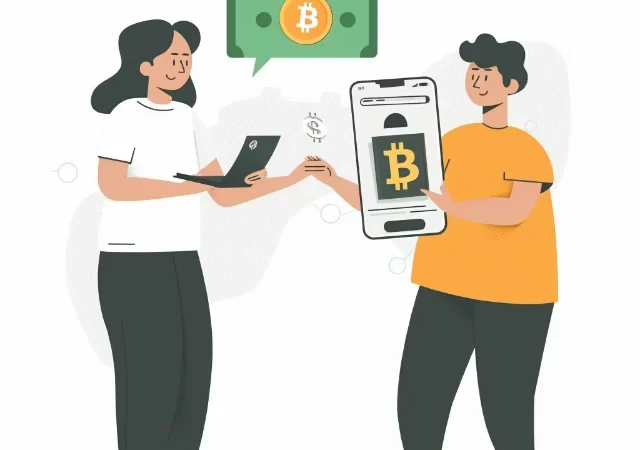
What it is: Sending crypto and, in return, receiving money in dinars through a bank from another individual, with an agreed fee.
When it makes sense: When you need it urgently, know the other party and do not want to register and leave information with an exchange or arrange to meet someone.
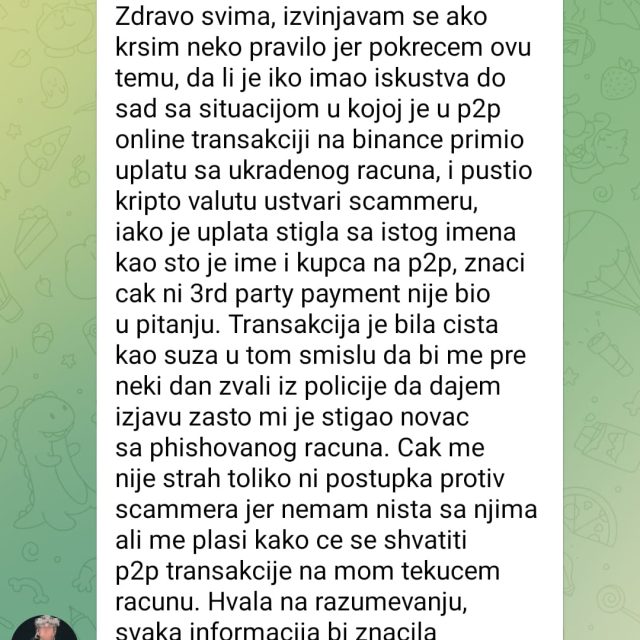
What you need to know: You must trust the other party. The party that sends money or crypto first may not receive anything in return. Recently, young people have begun hacking bank accounts and sending you money from stolen accounts to obtain crypto and obscure the money trail. In such a case, the police will contact you.
Selling Cryptocurrency Through Crypto Exchanges
We will cover 3 ways to sell crypto through an exchange, following the table.
Selling cryptocurrency on an exchange

What it is: You register with an authorized exchange, domestic or foreign, verify your identity and pay by card or bank transfer. In Serbia, the authorized exchanges are ECD and Crypto12, and all trading there takes place in dinars. The best-known foreign exchange is Binance; people also use Kraken, CEX, MXC, OK Coin and others.
When it makes sense: If you urgently need money or there is no dealer in your area. It also makes sense if you are dealing with large sums for which you need proof of origin, for example when buying an apartment. Do not forget to file a tax return if you make a gain.
What you need to know: Use only an authorized exchange; otherwise you will be scammed. If you use a foreign exchange, you may have problems with domestic cards, and domestic banks may create difficulties because they do not like working with foreign crypto exchanges, which are unfamiliar and suspicious to them. If you choose this option, it is best to use domestic exchanges: they pay tax to the country in which you live, and in some way that comes back to you. In any case, there is no major price difference between domestic and foreign exchanges. Do not forget to report tax.
Selling cryptocurrency through an exchange intermediary (P2P)
What it is: You register with a foreign exchange (Binance, for example, is the best known), verify yourself with an identity card and a live facial image, then go to P2P (peer to peer) and find a person, usually a foreigner, offering what you need. The listed money-transfer methods—bank, Wise, PayPal and so on—almost always involve some form of online transaction. Here the exchange guarantees that everything will proceed correctly, although that is far from a 100% guarantee.
When it makes sense: Rarely, mainly when you are in a foreign country and do not know any crypto dealers, the so-called cryptomaniacs. It is suitable only for smaller amounts because, for larger ones, the bank, PayPal or anyone else may create problems.
What you need to know: This method is for experienced traders because hidden costs or scams can easily arise. Never send crypto until the money has arrived in your account, and it must come from the person you contacted—the name on the exchange must match their name at the bank. Avoid PayPal because of frequent scams, especially if you are selling crypto, because the buyer may ask their bank to return the money by falsely reporting fraud.
Selling cryptocurrency through PayPal, Wise and similar services
What it is: PayPal and similar processors are for more experienced traders. Withdrawing money from PayPal and other platforms is very difficult—or expensive—but possible. If you have a significant amount, send us a message for advice. Broadly, there are two possibilities:
PayPal + a foreign exchange that supports PayPal.
PayPal + sending money to another trusted individual who then sends it to your bank or gives you cash at an in-person meeting
When it makes sense: If you have money stuck on PayPal or in a foreign account.
What you need to know: PayPal can be strict and freeze funds if something seems suspicious. You pay a fee of about 3% when sending to another PayPal account.
Cryptocurrency Tax in Serbia
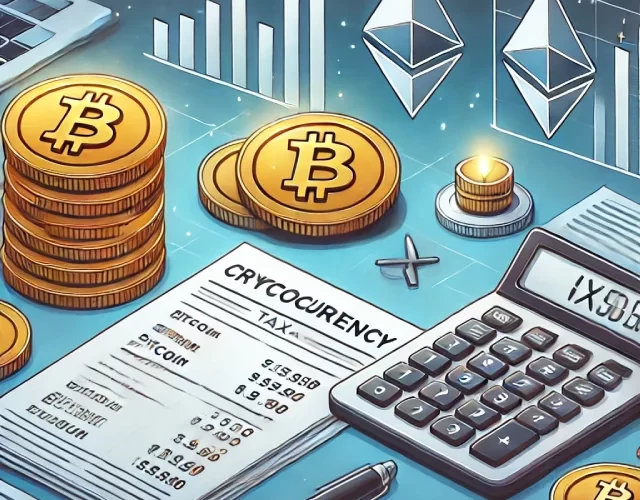
After selling cryptocurrency, you may be obliged to pay tax.
Cryptocurrencies were legalized under the 2020 Law on Digital Assets, and cryptocurrency tax therefore exists. Although it is new, people have already filed tax returns and paid tax, so you will be far from the first.
You are required to pay 15% capital-gains tax if you are a resident of the Republic of Serbia and made a gain when selling cryptocurrency—in other words, you sold it for more than you paid.
The acquisition price is the price at which you bought it on an exchange or from an individual. If you obtained cryptocurrency through mining, the acquisition price equals all mining-related costs that you can prove, such as machines, electricity and rent.
If you cannot demonstrate the acquisition price, you pay 15% tax on the full amount of cryptocurrency sold, rather than only on the gain.
If you made a loss rather than a gain, you can use that loss to reduce your tax base the next time you pay tax.
You are not required to pay tax if you held the cryptocurrency for longer than 10 years. This is too long a period, and everyone is calling for the law to be changed.
The deadline for filing the tax return is 120 days after the end of the quarter in which the sale income was earned. Quarters end in months 3, 6, 9 and 12 of the year.
For additional questions, contact a lawyer or accountant. We can connect you with someone; contact us through the chat.
Where Should You Store Crypto Until You Sell?
There are several ways to store crypto safely. Choose the one that suits you best.
Keeping crypto on an exchange
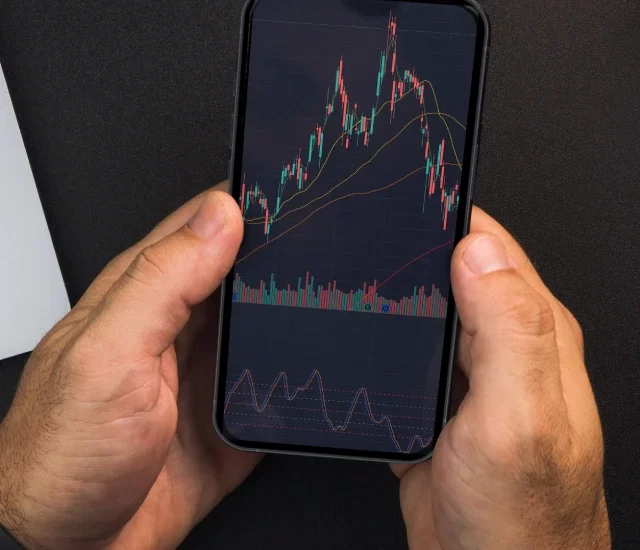
Security level: The lowest of the available options because exchanges are vulnerable to hacking or bankruptcy. Today, the largest exchanges have stood the test of time, and some of them have never been hacked (Binance).
How to protect yourself: You cannot protect yourself from someone hacking an exchange or the exchange itself going bankrupt. Your funds there are not insured, unlike money that the state insures in a bank up to a certain amount. You can protect yourself only from malicious people by keeping your password safe, not giving your phone to just anyone and never giving your password to anyone, even if someone claims to work for the exchange.
Who it suits: People who trade relatively often and need money on the exchange so they can move from one currency to another. Do not leave money sitting on an exchange if you will not touch it for a long time.
Keeping crypto in a mobile app (crypto wallet)
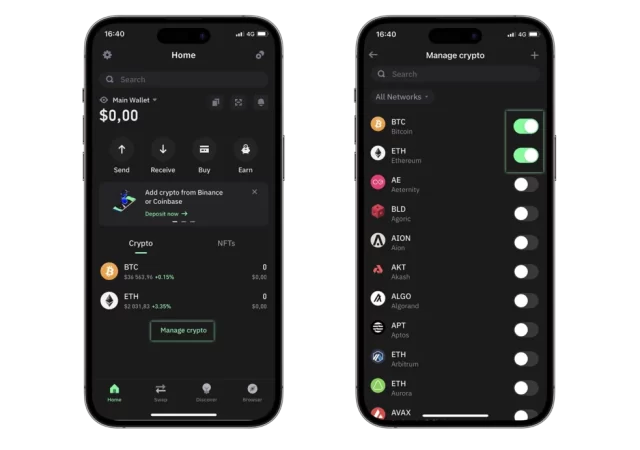
Security level: Medium. Although your crypto is not on an exchange, it is on a phone connected to the internet, especially Wi-Fi, and malicious people may try to exploit that. Apple phones are harder to hack.
How to protect yourself: Keep the passwords for the app and phone “offline,” meaning not in electronic form, and keep them in several physically separate places. If someone learns the password to your app, the crypto is theirs, unless you have configured additional barriers in the app settings.
Who it suits: People who do not trade often, take care of their phone's security and do not have large sums in the account.
Keeping crypto in a cold wallet
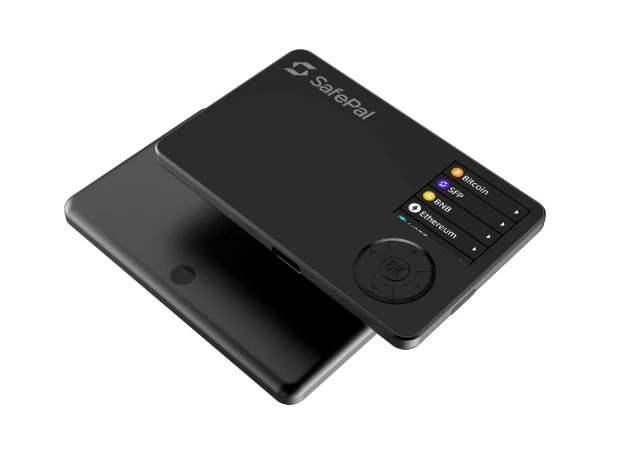
Security level: The highest of the options mentioned because a “cold” wallet is connected neither to the internet nor to Bluetooth—hence the name cold—which makes a hacker's task exceptionally difficult.
How to protect yourself: Never photograph the master password, a sequence of 12–24 unrelated words, or keep it on an electronic device. Make several copies and hide them in several different places, in more than one building, because if your house burns down, for example, all the passwords will burn and you will be unable to access the crypto.
Who it suits: People who have larger sums in the account, do not touch that crypto often and do not pay attention to their own security.
Would you like to buy or sell another way?
Comments
Comment without registering. Your comment becomes visible only after approval.
Published comments
There are no published comments on this page yet.